Photo Courtesy: Imagine! Studios
Clemson Defense Grades Out in 27-16 Win Over Troy: A Second-Half Shutdown Showcases Growth
On September 6, 2025, the No. 8 Clemson Tigers’ defense played a pivotal role in a come-from-behind 27-16 victory over the Troy Trojans at Memorial Stadium, erasing a 16-3 halftime deficit. After a resilient but flawed performance in a Week 1 loss to No. 3 LSU, the Tigers’ defense stepped up against Troy, particularly in the second half, forcing three turnovers and stifling Troy’s rushing attack. This article grades Clemson’s defensive performance, highlights key stats, incorporates quotes from players, coaches, and media, compares development across the first two games, and notes that six of Troy’s points came from an offensive turnover.
Game Overview and Storylines
Clemson entered the Troy game off a 17-10 loss to LSU, where the defense was on the field for over 37 minutes, allowing 354 total yards but forcing two turnovers to keep the game close. Against Troy, a 1-0 Sun Belt team with a potent rushing attack led by Tae Meadows, the Tigers’ defense faced another test of endurance.
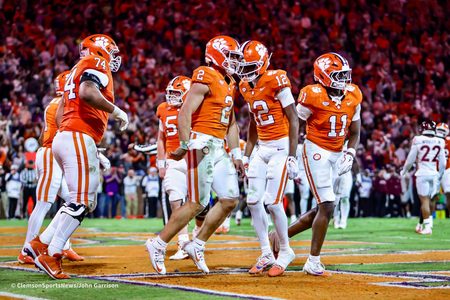
A one-hour-and-32-minute lightning delay disrupted the first quarter, and Troy capitalized early, building a 16-3 lead with a 44-yard touchdown pass, a 37-yard field goal, and a pick-six off quarterback Cade Klubnik. However, Clemson’s defense dominated the final 30 minutes, holding Troy scoreless and forcing three turnovers to fuel a 24-point comeback. The performance showcased growth from Week 1, though early lapses highlighted areas for refinement.Defensive GradesOverall Defense: A-Clemson’s defense allowed 301 total yards (223 passing, 78 rushing) and 16 points, but six points came from a pick-six by Troy’s TJ Thompson, meaning the defense was directly responsible for only 10 points.
The unit forced three turnovers (all interceptions) and recorded four sacks, holding Troy to 16 first downs and a 0.9 yards-per-carry average in the second half. The first half was shaky, with Troy controlling possession (33:01 total) and averaging 4.1 yards per carry (sack-adjusted). The second-half shutout, however, was a testament to adjustments and physicality, earning a strong grade despite early struggles.
Defensive Line: B+
The defensive line, led by DeMonte Capehart and Will Heldt, generated consistent pressure, recording four sacks and six tackles for loss. Capehart’s nine-yard sack in the first quarter set an early tone, and Heldt led with two tackles for loss. The unit struggled early against Troy’s rushing attack, allowing 76 yards on 16 carries (4.8 YPC) to Tae Meadows in the first half. After halftime adjustments, they limited Meadows to just 2 yards on 8 carries (0.25 YPC), showcasing improved gap discipline.
Linebackers: A
Linebacker Wade Woodaz was the defensive MVP, leading the team with 11 tackles, including one for loss. His relentless pursuit and coverage ability were critical in containing Troy’s passing game, which averaged 7.2 yards per attempt. The linebacker corps, including contributions from Barrett Carter, effectively shut down Troy’s short passing game in the second half, limiting completions to 6-of-15 for 54 yards. Their physicality was praised by coach Dabo Swinney: “Wade [Woodaz] and our linebackers played with heart. They flipped the switch after halftime.”
Secondary: A-
The secondary shone in the second half, intercepting three passes from Troy quarterback Goose Crowder (19-of-31, 223 yards, 1 TD, 3 INTs). Ricardo Jones snagged an interception off a deflection from Ashton Hampton’s backside, setting up a 26-yard touchdown pass, while Ronan Hanafin grabbed another off a Troy receiver’s hands. Hampton’s first-quarter interception (Clemson’s first of the game) came with 2:06 left, though it didn’t lead to points. The unit allowed a 44-yard touchdown pass early but tightened up, holding Troy to 3-of-11 on third downs. CBS Sports noted, “Clemson’s defense engineered two highlight-worthy interceptions in the second half,” highlighting the secondary’s impact.
Special Teams (Defensive Context): B
While primarily an offensive unit, kicker Nolan Hauser’s 25- and 30-yard field goals indirectly supported the defense by keeping Clemson within striking distance. Punt coverage was solid, with Troy’s average starting field position at their own 27-yard line, limiting opportunities for big returns. No major special teams miscues occurred, but the unit didn’t directly contribute to defensive stops.Standout Players
- Wade Woodaz (LB): Woodaz’s team-high 11 tackles and one tackle for loss anchored the defense. His second-half dominance helped limit Troy to 78 rushing yards total.
- Will Heldt (DE): Heldt’s two tackles for loss and one sack disrupted Troy’s offensive rhythm, particularly in the second half, where he helped collapse the pocket on Crowder.
- Ricardo Jones (DB): Jones’ interception, sparked by a deflection off Hampton, set up a critical touchdown 58 seconds after Adam Randall’s score, flipping the game’s momentum.
Key Stats
- Total Defense: 301 yards allowed (223 passing, 78 rushing), 16 points (10 defensively surrendered).
- Turnovers: Three interceptions (Jones, Hanafin, Hampton), one fourth-down stop.
- Sacks/Tackles for Loss: Four sacks, six tackles for loss (Heldt: 2 TFLs, Capehart: 1 sack).
- Rushing Defense: Held Troy to 78 yards (2.6 YPC overall, 0.9 YPC in second half).
- Third Downs: Troy converted 3-of-11 (27.3%).
- Time of Possession: Troy held the ball for 33:01, largely due to a 20:14 first-half edge.
Comparison to Week 1 (LSU) and Development
Against LSU, Clemson’s defense allowed 354 yards (246 passing, 108 rushing) and 17 points, with two turnovers forced (one interception, one fumble). The unit was on the field for 37:04, recording 82 total tackles (31 more than LSU) but struggling with third-down conversions (LSU: 6-of-14, 42.9%). A post on X from
- Turnovers: Increased from two to three, with all three interceptions in the second half showcasing better ball-hawking (vs. one interception vs. LSU).
- Third-Down Defense: Improved from 42.9% (LSU) to 27.3% (Troy), reflecting tighter coverage and pressure.
- Rushing Defense: Held Troy to 78 yards (2.6 YPC) compared to LSU’s 108 yards (3.6 YPC), with a dominant second half (0.9 YPC).
- Points Allowed: Allowed 10 defensive points (16 total, 6 from pick-six) vs. 17 against LSU, showing better red-zone efficiency.
However, the first half against Troy exposed vulnerabilities, as Troy’s 44-yard touchdown pass and 4.8 YPC (first half) echoed LSU’s ability to exploit early gaps (246 passing yards). The second-half adjustments, credited to defensive coordinator Wes Goodwin, were lauded by Swinney: “Wes [Goodwin] got those guys dialed in at halftime. We stopped the run and made them one-dimensional.” This adaptability marks progress from Week 1, where adjustments were slower against LSU’s balanced attack.Impact of Offensive TurnoverTroy’s 16 points included a 4-yard pick-six by TJ Thompson off Klubnik in the second quarter, meaning the defense was directly responsible for only 10 points (a 44-yard TD pass and a 37-yard field goal). This mirrors the LSU game, where the defense kept the game close despite offensive struggles (one touchdown, 261 yards). The pick-six inflated Troy’s lead to 16-0, but the defense’s second-half shutout ensured it didn’t define the game.
Quotes
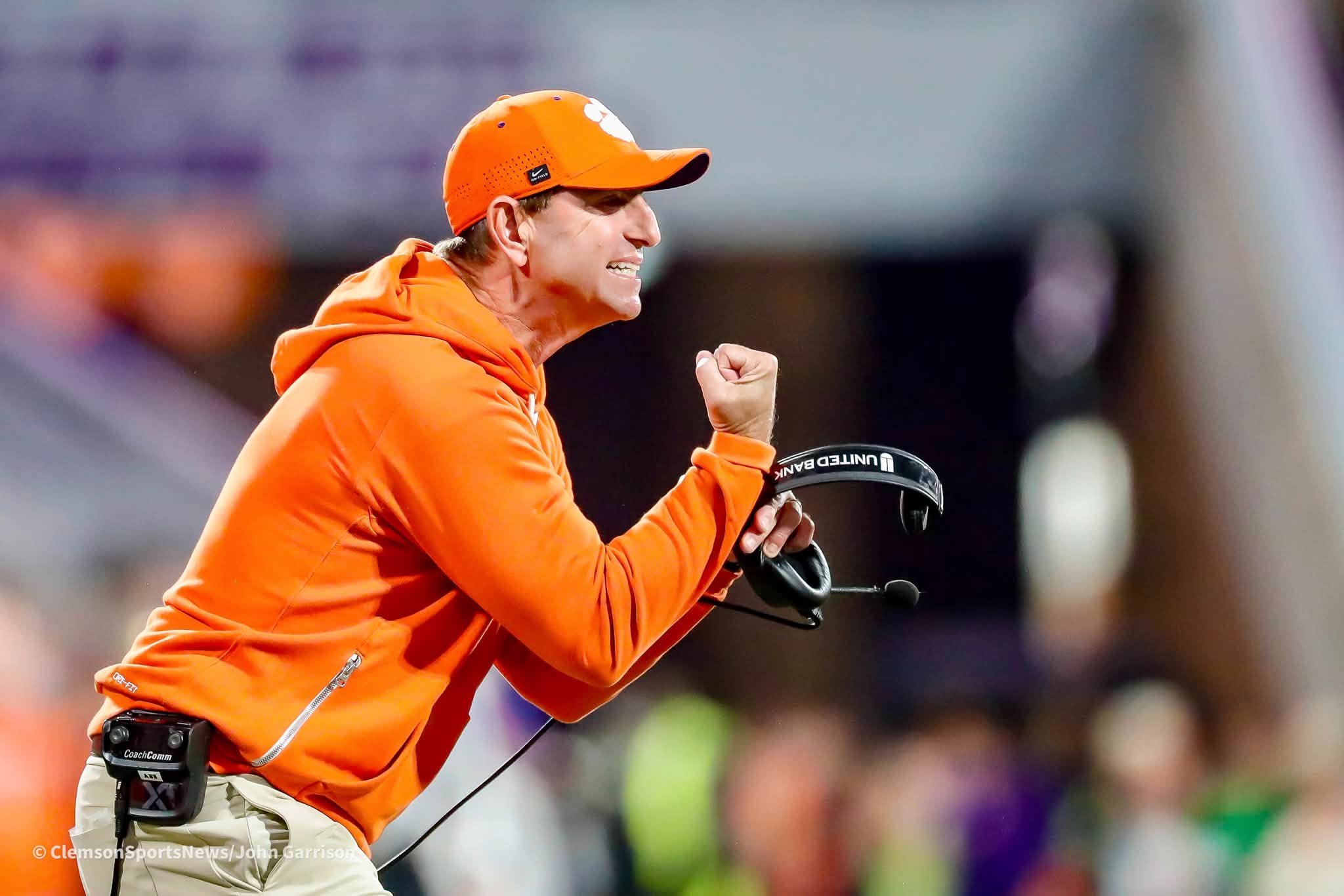
- Dabo Swinney (Head Coach): “Our defense showed what we’re capable of in that second half. Three picks, four sacks, and shutting down their run game—that’s Clemson football.”
- Wade Woodaz (LB): “We knew we had to step up after halftime. We weren’t going to let that first half define us. It’s about playing all four quarters.”
- Will Backus (CBS Sports): “Clemson’s defense engineered two highlight-worthy interceptions in the second half… [and] forced three total turnovers, including a fourth-down stop.”
Looking Ahead
Clemson’s defense showed significant growth from Week 1 to Week 2, particularly in forcing turnovers (three vs. two) and tightening third-down defense (27.3% vs. 42.9%). The second-half shutout against Troy, limiting them to 0.9 YPC and 54 passing yards, highlights a unit finding its identity under Goodwin. However, early lapses (44-yard TD, 4.8 YPC in first half) suggest the defense must start faster against ACC opponents like Georgia Tech next week. Swinney’s emphasis on “dudes gotta be dudes” applies here, with Woodaz, Heldt, and Jones emerging as key playmakers. If the defense sustains its second-half form, it could anchor Clemson’s playoff aspirations.